
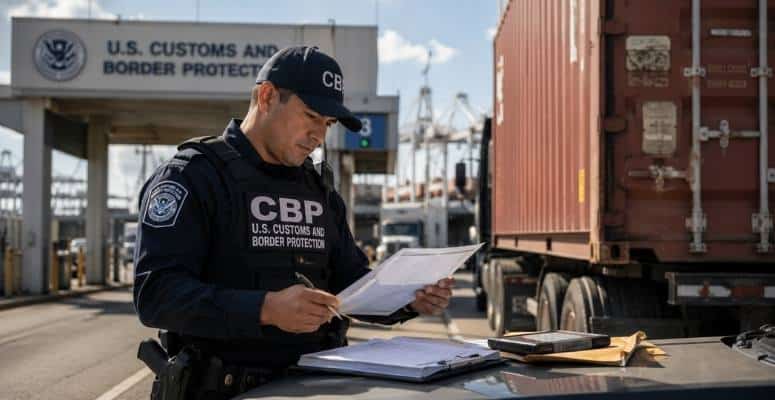
What learners, employers, and licensed customs brokers should understand before choosing a logistics learning provider.
Choosing the right USA logistics training is not only about course content. It is also about the credibility of the certificate. Learners want to know whether the training will be recognized by employers, whether it connects to the freight forwarding industry in the United States, and whether the credential carries enough recognition to be worth the investment.
That is why the relationship matters between the National Customs Brokers & Forwarders Association of America (NCBFAA) and the NCBFAA Educational Institute (NEI) membership. NCBFAA accredits TraversEd training (except Schulich courses) and partners to offer it to its thousands of members in the United States. The TraversEd Global Trade Certificate (TGT) is co-branded and offered through NEI to its members as an integral part of its logistics learning offering.
It bridges a key professional gap for learners who may recognize the value of freight forwarding education, but want to ensure that the certificate has industry relevance, and our partnership with NCBFAA ensures this. The value of the TGT Certificate is not that it makes someone “certified” or guarantees a job. Its value is in teaching to the core competencies required to perform the role of a freight forwarder. The certificates from TraversEd also earn the learner continuing education credits towards four of NCBFAA’s professional designations: CCS, MCS, CES, or MES as well as for licensed customs brokers.
The USA learner challenge is not lack of interest. It’s knowing where to start.
Many learners in the USA already see logistics, freight forwarding, customs, and global trade as practical career territory. The harder question is where to start.
A learner may ask:
- Which logistics training is actually relevant to freight forwarding?
- Will employers recognize this certificate?
- Is this different from generic supply chain education?
- Is this training recognized in the United States?
- Will this training help me get a job?
- Will this training help advance my career as a logistics professional?
These are not small questions. They are the questions that decide whether someone registers or keeps looking for a program that makes sense.
The USA market insists on credibility as a core priority for its education providers — especially among learners and employers in port regions and cities with airport hubs where freight forwarding roles are abundant. NCBFAA Educational Institute (NEI) is central to that USA relevance: TGT certificates carry USA recognition and count as continuing education credits toward the education requirements for licensed custom brokers, and those holding professional designations with NEI, like CCS, MCS, CES, or MES.
What NCBFAA and NEI mean in this context
What is NCBFAA?
NCBFAA stands for the National Customs Brokers & Forwarders Association of America, the authoritative trade association representing USA customs brokers, freight forwarders, and related logistics professionals.
What is NEI??
NEI is the NCBFAA Educational Institute, its dedicated training and credentialing arm. Together, they are a leading national voice for the USA customs brokerage and freight forwarding education ecosystem.
According to NCBFAA, “The NEI Professional Membership is open to individual employees of firms not eligible for other categories of NCBFAA membership but interested in expanding their knowledge of the transportation logistics industry through various courses, webinars, and educational offerings”.
For TraversEd, the relationship matters because it connects the TGT Certificate to a recognized USA freight forwarding and customs association. This is especially important for learners who want training that is international in scope, but meets the needs of USA employers.
Why customs brokers continuing education matters for eligible learners
One of the more concrete relevance signals in the USA is the continuing education credits offered by NCBFAA.
The current U.S. Customs and Border Protection (CBP) continuing education program applies to individually licensed customs brokers. CBP requires brokers to complete 36 continuing education credit hours during a triennial period.
That does not mean continuing education credits are relevant to every TraversEd learner, nor does it mean every learner is a licensed customs broker. Rather, this is a specialized benefit available to eligible professionals.
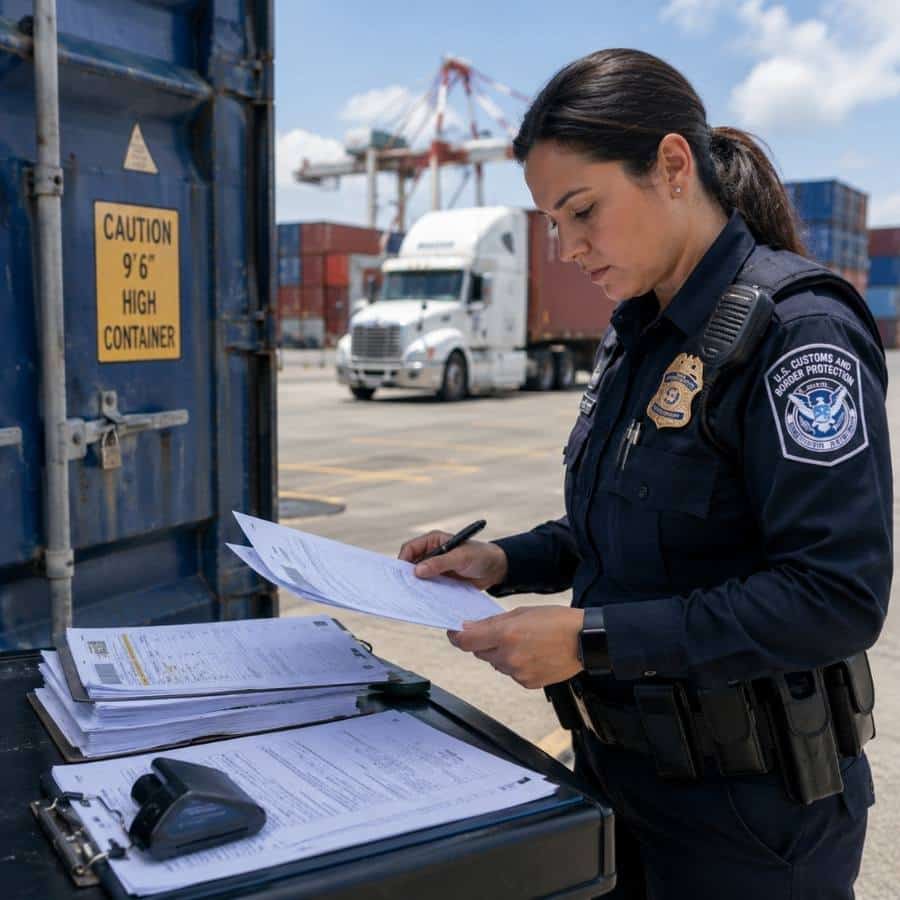
For licensed customs brokers and others working in customs compliance roles, continuing education credits can be an important factor in course selection. In these cases, a course is valued not only for the knowledge and skills it provides, but also for its ability to support ongoing professional and regulatory requirements.
TraversEd’s relationship with the NCBFAA is an important part of how TraversEd supports freight forwarding education in the United States. Through this collaboration, NCBFAA members have direct access to TraversEd’s freight forwarding courses and the Global Trade Certificate, a co-branded certificate developed to support practical, industry-relevant learning.
It gives USA professionals a structured pathway to build freight forwarding knowledge, strengthen operational capability, and apply that learning directly to their work in global trade.
What this changes for career starters
For career starters, the NCBFAA / NEI relationship does not magically turn training into a job offer. What it does provide is additional context and credibility.
A learner can say they completed a Global Trade Certificate delivered through a partnership between TraversEd and the NCBFAA’s National Educational Institute (NEI), the educational arm of the leading logistics association in the USA representing customs brokers and other international trade professionals.
This can help a learner explain:
- Why they chose the training
- What the certificate represents
- How the course connects to freight forwarding and global trade work
- Why the credential may be familiar to USA employers, customs brokers, freight forwarders, or industry partners
- What they still need to learn through workplace experience
For someone trying to move into logistics coordinator, freight forwarding (ocean, air, road) coordinator, operations agent, sales agent, customs coordinator, and customs work, or global trade operations, that context can be valuable. The certificate does not replace experience, but it can help demonstrate commitment to the profession and make the first conversation with a potential employer more credible.
The TraversEd Global Trade Certificate has been offered to USA employers through TraversEd’s partnership with the NCBFAA’s National Educational Institute (NEI), and we continue to see interest from organizations of all sizes. Most recently, DSV U.S. launched a pilot program to provide the training to new hires in New Jersey and Philadelphia, building on a model that has already delivered strong results for DSV in Canada.
What makes these programs so valuable is that they benefit both the employer and the employee. Employers gain a more knowledgeable, confident workforce with a common foundation of industry knowledge. Employees gain skills that support their long-term career development. When organizations invest in quality training, they are sending a powerful message: your growth matters, your career matters, and we are committed to helping you succeed.
What this changes for employers
Employers evaluate training differently than learners do. A learner may ask, “Will this help me stand out?” An employer asks, “Does this training help someone understand the work?”
The NCBFAA / NEI relationship can help employers understand where the TGT Certificate fits. It gives the training a USA industry reference point, especially for freight forwarding and customs-adjacent teams.
For employers, that can support:
- New-hire onboarding
- Baseline freight forwarding knowledge
- Cross-training between roles
- Team development in multimodal transport
- A more consistent understanding of documentation, cargo movement, customs regulations, and transportation modes
- Soft skill training in Sales, Client Service and Finance
- Continuing education support for eligible licensed customs brokers
This is especially useful for teams that need training to fit around operations. TraversEd offers online, on-demand, and instructor-led delivery – a flexibility advantage for busy professionals and corporate onboarding.
What this changes for academic and industry partners
For academic institutions, associations, and industry networks, USA recognition matters because partners need confidence before they integrate outside course material. A program director may understand the need for logistics and freight forwarding education. The barrier to launching a program may not be a lack of available material. It may be credibility, speed, and internal resources.
TraversEd helps academic institutions fill curriculum gaps with freight forwarding and global trade course material — without building every course from scratch.
For partners, the NCBFAA / NEI relationship can help answer an important question: Does this course material connect to the USA freight forwarding environment?
When the answer is yes, the partnership conversation changes. TraversEd is not simply a course provider. It becomes a curriculum and training partner with a more credible USA standing.
Where the TGT Certificate fits
The TraversEd Global Trade Certificate is the flagship certificate for learners and teams building freight forwarding and global trade knowledge. It includes three tiers of courses:
| Course | Role in the pathway |
|---|---|
| Tier 1 – International Transportation and Trade | Introduces freight forwarding by land, ocean, and air |
| Tier 2 – Essentials of Freight Forwarding | Builds knowledge around documents, compliance, export packaging, dangerous goods, and freight forwarding responsibilities |
| Tier 3 – Advanced Freight Services | Covers project cargo, air and ocean chartering, customs, and transportation law |
Together, the courses create a progression. Learners can start with fundamentals, build practical freight forwarding knowledge, and move into more advanced service areas.
For USA learners, the NCBFAA / NEI relationship adds context to the certificate. It helps answer the question behind the question: “Will this make sense in the USA market?
Conclusion
The NCBFAA / NEI recognition strengthens the position of the TraversEd Global Trade Certificate within the freight forwarding and customs brokerage education landscape in the United States. It provides learners with a clear connection to established industry organizations, gives employers a familiar point of reference when evaluating training, and may support CBP continuing education credit for eligible licensed customs brokers where applicable.
For learners exploring global trade education, the value lies in the combination of practical industry knowledge, structured learning, and strong industry alignment. The result is a credential that is easier for employers to understand, easier for learners to communicate, and more clearly connected to the skills and knowledge required in real-world freight forwarding and global trade operations.
Build freight forwarding knowledge with TraversEd.
Explore the TraversEd Global Trade Certificate Certificate or register for a course through the TraversEd course catalog.
FAQs about NCBFAA / NEI recognition and TGT
Yes. TraversEd has an NCBFAA / NEI educational alliance. All tiers of certificate are offered directly through NCBFAA for their members. All but the Schulich courses are eligible and provide accredited credits toward U.S. Customs and Border Protection continuing education credits for licensed customs brokers.
No. The TraversEd Global Trade Certificate is not a personal certification. Learners complete training and earn a certificate. They are not certified, licensed, or professionally designated upon completion of the courses.
Members of NCBFAA benefit the most, as they receive member pricing, and access to all industry education, including the TraversEd suite of courses. As well, anyone in the USA, including learners, employers, academic partners, and eligible licensed customs brokers, may benefit with access to courses and partnership opportunities for schools. Learners gain a clearer USA credibility signal. Employers gain a stronger reference point for training. Licensed customs brokers may be able to apply eligible training toward continuing education requirements where applicable.
Yes, but differently. If you are not a licensed customs broker, the continuing education credit may not apply to you personally. The broader value is that the TGT Certificate has a clearer USA industry context than a generic logistics course.
